Every year, our team circles one particular fixture on the calendar with extra anticipation: our annual client day at York Races. It is an opportunity to step away from screens, enjoy great hospitality, and celebrate the partnerships we have built.
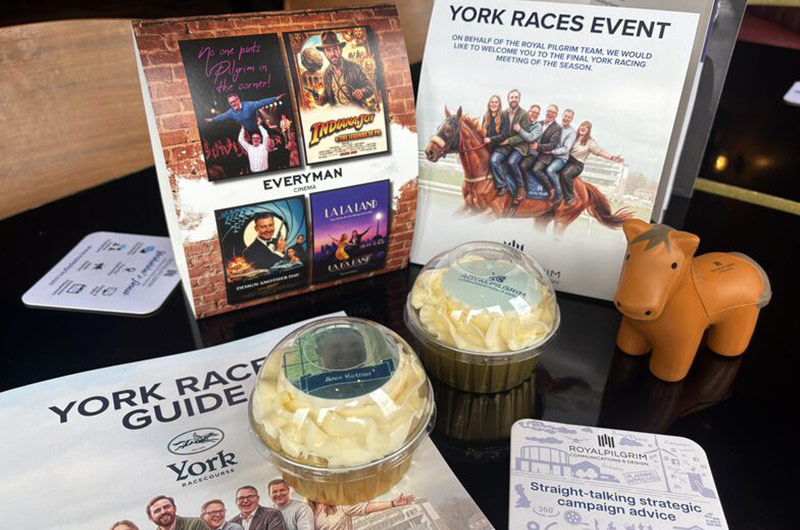
As part of the tradition, we prepare bespoke gift bags for our guests. This year’s pack included branded pens, high-spec stationery, custom race cards, and personalised cakes. Beyond the hospitality, however, the gift bags served as a real-world testing ground for a design workflow we have been refining behind the scenes: how to effectively integrate generative AI into tangible, physical print.
The Spark: Generating the Visual Language
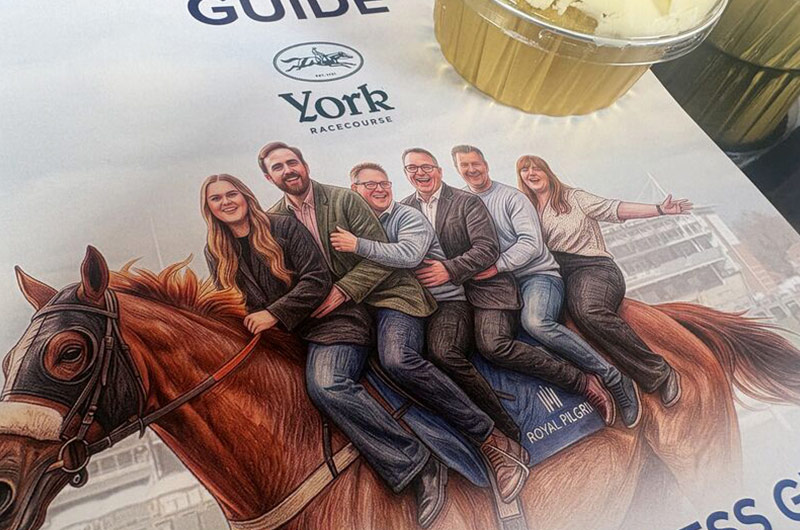
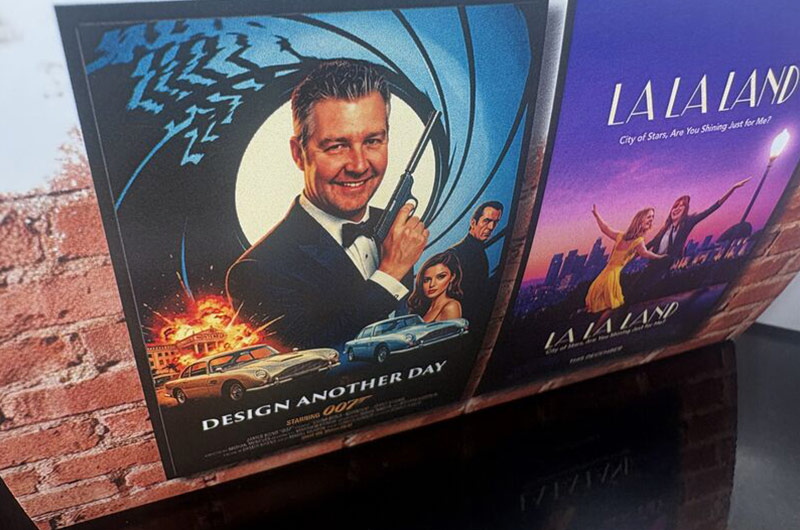
Generative AI tools have made rapid strides in concept generation. Rather than spending days producing initial mood boards, we used AI image generation to explore stylistic treatments, textural motifs, and colour palettes that captured the teams personalities.
The Reality Check: Why AI Needs Human Craft in Print
We are seeing an influx of fully AI-generated print collateral across the industry, but relying on machine output alone often leads to disappointment. Print design carries technical requirements that generative image models simply do not understand:
- Colour Systems & Profiles: AI generates in RGB screen colour. Translating those graphics into accurate CMYK formulas, spot varnishes, or Pantone-matched corporate inks requires skilled oversight.
- Typography & Brand Alignment: Clean typography, kerning, hierarchy, and readable point sizes on complex stationery layouts are areas where automation falls short.
- Format-Specific Layouts & Pre-Press: Setting up precise bleed margins, crop marks, dielines for packaging, and food-safe edible ink templates for confectionery demands human expertise.
Our designers refined the AI-generated imagery, balanced the compositions, established clear typographic hierarchy across the stationery, and prepared the final artwork for press.
The Balanced Verdict: AI as the Co-Pilot, Not the Finisher
Our day at York was a success, and the feedback on the bespoke gift bags confirmed what we believe about the future of creative production:
AI is exceptional for ideation and visual foundations, but craft, tactile judgement, and technical precision still belong to human designers.